 HarmoniaMentis
Prescribing practicalities


- Seizure freedom (i.e., zero seizures), with no adverse events (AEs) from ASMs, with the fewest number of ASMs possible.
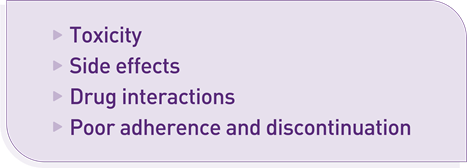
While monotherapy is the treatment of choice for newly diagnosed epilepsy, some patients may require treatment with a combination of ASMs to achieve optimum efficacy, especially those with drug-resistant epilepsy (DRE).2-4 However, care should be taken to avoid excessive drug load, which is associated with an increased risk of:2,4,5
There are no specific criteria for which combination of ASMs to use, so healthcare professionals (HCPs) could consider factors such as:2,4-6

Using drugs with different mechanisms of action and different adverse event profiles may help to optimise efficacy and reduce the risk of adverse effects.1,6
A few patients will become seizure-free with a combination of three ASMs, but treatment with a combination of four or more is unlikely to be successful.4 The addition of a fourth drug should generally be avoided due to the occurrence of adverse events and minimal improvement in seizure control.6
Reducing the number of ASMs can help to minimise adverse events, which may enhance treatment adherence, reduce costs and improve quality of life2
- Discontinuing ASMs that are unnecessary should therefore be an important therapy goal2


NICE guideline for people with epilepsy
For first- and second-line treatment in people with epilepsy, the NICE guideline recommends monotherapy wherever possible.3

-
Consider lamotrigine or levetiracetam as first-line monotherapy for people with focal seizures. If the first choice is unsuccessful, consider the other of those options.
-
If first-line monotherapies are unsuccessful in patients, consider one of the following second-line monotherapy options: carbamazepine, oxcarbazepine or zonisamide. If the first choice is unsuccessful, consider the other second-line monotherapy options.
-
If second-line monotherapies tried are unsuccessful in people with focal seizures, consider lacosamide as third-line monotherapy.
-
If monotherapy is unsuccessful in people with focal seizures, consider one of the following first-line add-on treatment options: carbamazepine, lacosamide, lamotrigine, levetiracetam, oxcarbazepine, topiramate or zonisamide. If the first choice is unsuccessful, consider the other first-line add-on options.
-
If first-line add-on treatments tried are unsuccessful, consider one of the following second-line add-on treatment options: brivaracetam, cenobamate (in line with NICE’s TAG), eslicarbazepine acetate, perampanel, pregabalin† or sodium valproate‡ except in women and girls able to have children. If the first choice is unsuccessful, consider the other second-line add-on options.
-
If second-line add-on treatments tried are unsuccessful, consider one of the following third-line add-on treatment options: phenobarbital, phenytoin, tiagabine, or vigabatrin. If the first choice is unsuccessful, consider the other third-line add-on options.
- It is important to use the regimen that provides the best balance in terms of effectiveness and tolerability of adverse events3
- The benefits of rationalising medications (using a single medicine if possible and what to consider if this monotherapy is unsuccessful) should be discussed with the patient (and their families and carers if appropriate) to ensure the patient is not taking more medicines than is necessary, to reduce the impact of adverse events3
- Because of the possible interactions between ASMs, add-on therapies should be carefully titrated and patients should be monitored for adverse events and their medicines reviewed frequently3
Footnotes:
*Some treatments in the NICE guidance were not licensed in some age groups as of April 2022. Please see the Summary of Product Characteristics before prescribing.
†For guidance on prescribing of pregabalin in adults, see NICE's guideline on medicines associated with dependence or withdrawal symptoms.
‡Do not offer sodium valproate as an add-on treatment for focal seizures in women and girls able to have children (including young girls who are likely to need treatment when they are old enough to have children), unless: other treatment options are unsuccessful; the risks and benefits have been fully discussed, including the risks to an unborn child; and the likelihood of pregnancy has been taken into account and a pregnancy prevention programme put in place, if appropriate. Follow the MHRA safety advice on valproate use by women and girls.
NICE recommends the use of ONTOZRY® as an option for treating focal-onset seizures with or without secondary generalised seizures in adults with drug-resistant epilepsy that has not been adequately controlled with at least 2 anti-seizure medicines.3,7

Some patients may be able to have concomitant ASM doses lowered or discontinued after clinical efficacy with adjunctive ONTOZRY® is established to reduce their overall drug burden and reduce the risk of AEs.8
In some patients, the doses of concomitant ASMs may be proactively reduced proactively to prevent AEs, once patients have reached the 100mg*/day dose of ONTOZRY® if their seizures are improving.8
A panel of seven epileptologists developed recommendations for initiating ONTOZRY® in adults using a modified Delphi process. Key recommendations included:2
- To reduce the risk of adverse events during adjunctive ONTOZRY® titration:
- Lower the dose of clobazam, phenytoin, and phenobarbital due to their known drug–drug interactions with ONTOZRY®
- Lower the dose of lacosamide due to a pharmacodynamic interaction with ONTOZRY®
- For other ASMs, reactive lowering of a concomitant ASM dose is sufficient owing to quick resolution of adverse effects
- For carbamazepine and lamotrigine doses exceeding the upper end of standard dosing (e.g., carbamazepine >1200 mg/day; lamotrigine >500 mg/day), consider proactive dose reduction at ONTOZRY® 200 mg/day
- All dose reductions for adverse events can be repeated every 2 weeks as directed by the AEs
- At a dose of ONTOZRY® 200 mg/day, evaluate patients for improvement of seizures and consider further dose reductions to reduce potentially unnecessary polypharmacy
Footnotes:
*Recommended target dose of Cenobamate is 200 mg/day.

While no dose adjustments are required with many concomitant ASMs,1 reducing doses of concomitant ASMs may improve retention rates for ONTOZRY®.9
Retrospective data from a Phase III open-label study showed that reductions in phenytoin, clobazam, and lacosamide, particularly during the cenobamate titration phase, resulted in better retention compared to other ASMs.9
Post hoc analysis of C021 Phase III open-label study9
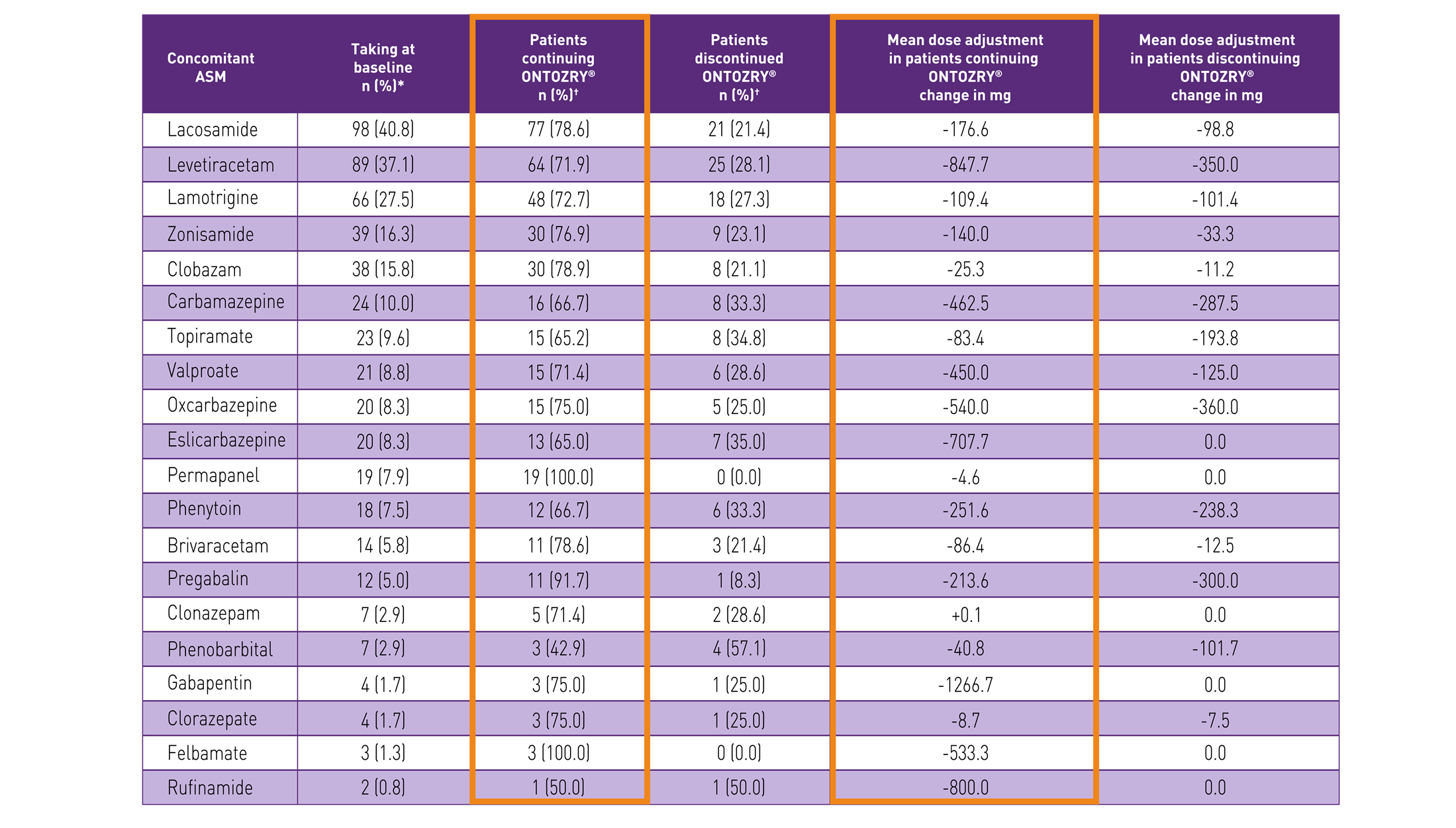 Table adapted from Rosenfeld et al. 2021.9
Footnotes
*Most patients were taking >1 concomitant ASM. Percentages calculated from a total of 240 patients.9
†Percentages calculated from total number of patients taking the specific concomitant drug at baseline.9
In the clinical trials C013 and C017, most patients had DRE and the most frequent concomitant ASMs were levetiracetam and sodium channel blockers (lacosamide, carbamazepine or oxcarbazepine), including some at the upper range of dosing.8
In a post hoc analysis, dose reduction was found to be particularly helpful for patients that were:8,9
- experiencing dizziness or sedation and taking higher doses of concomitant ASMs
- receiving sodium channel blockers that cause dizziness or benzodiazepines with sedating properties
Seizure freedom rates increased with ONTOZRY® dose, and a post hoc analysis demonstrated that this was consistent regardless of the number of baseline concomitant ASMs.8,9
-
Post hoc analysis of C021 Phase III open-label study10
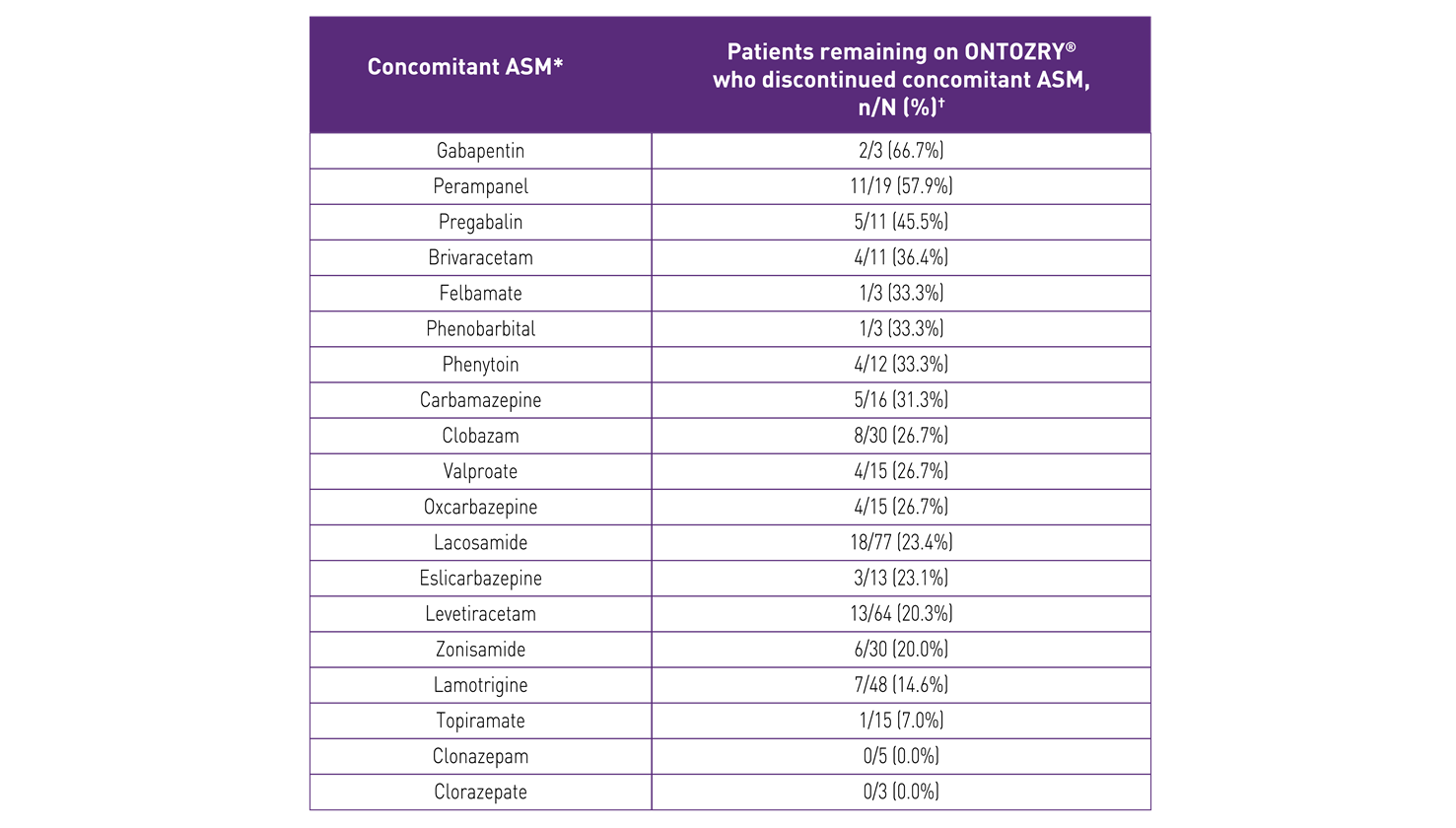
Table adapted from Rosenfeld et al. 2021.10
Footnotes:
*Most patients were taking >1 concomitant ASM.10
†Of the analysis population (n=240), 177 (73.8%) remained on cenobamate at the data cut-off visit on or after September 1, 2019 (median duration of exposure 32.9 months [range 22.1–43.0]).10
-
Adjustments to concomitant ASM(s):1
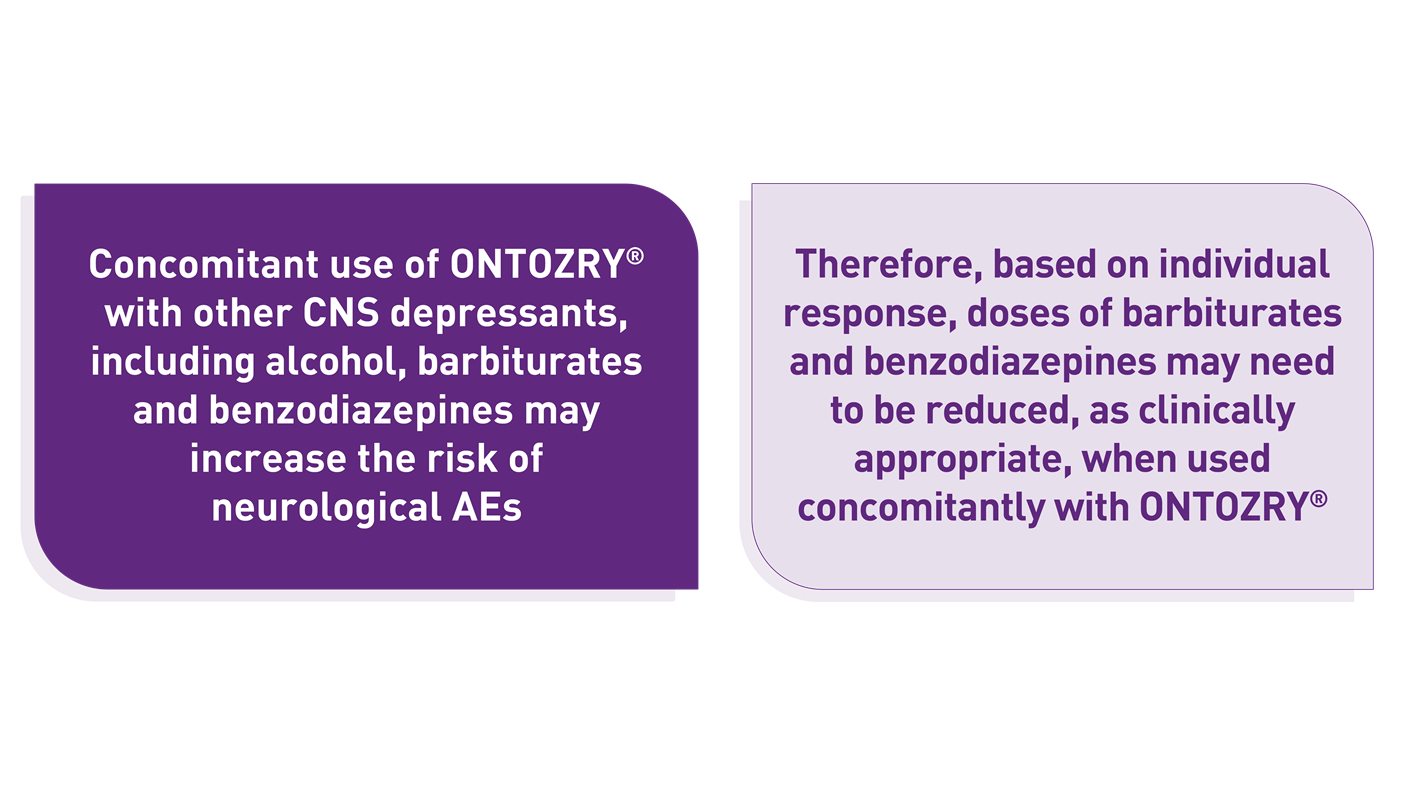
-
Phenytoin1
In a study in healthy subjects, concomitant administration of cenobamate 200 mg/day and phenytoin 300 mg/day slightly reduced cenobamate exposures (Cmax by -27%, AUC by -28%), and increased phenytoin exposures (Cmax by 67%, AUC by 84%). No dose adjustment of cenobamate is required. Phenytoin concentrations should be monitored during titration of cenobamate and, based on individual response, the dose of phenytoin may need to be reduced.
Phenobarbital1
In a study in healthy subjects, concomitant administration of cenobamate 200 mg/day and phenobarbital 90 mg/day did not cause clinically meaningful changes in cenobamate exposure but led to increased phenobarbital exposures (Cmax by 34% and AUC by 37%). No dose adjustment of cenobamate is required. Concentrations of phenobarbital should be monitored during cenobamate titration and, based on individual response, the dose of phenobarbital may need to be reduced.
C021 Phase III open-label study10
- Since ONTOZRY® inhibits CYP2C19, dosing guidance is needed when adding ONTOZRY® to ASM regimens containing phenytoin or phenobarbital
- Doses of phenytoin or phenobarbital could be decreased by 25%–33% during the ONTOZRY® titration period per clinical discretion
- A substantial portion of patients taking phenytoin and phenobarbital had their doses decreased during the ONTOZRY® titration (43.4% (n=36/83) and 29.7% (n=11/37), respectively)
- At the end of the titration phase, the mean plasma levels of phenytoin and phenobarbital were generally comparable to baseline plasma levels, suggesting that the periodic dose reductions were effective at maintaining stable plasma levels
See Summary of Product Characteristics for dose adjustments for concomitant ASMs.1

- Although monotherapy remains the therapy of choice for epilepsy, polytherapy is often required in drug-resistant epilepsy (DRE)
- There are no specific criteria for which combination of ASMs to use, so consider factors such as patient characteristics, comorbidities, pharmacokinetics, safety profile and tolerability
- Combination strategy may involve drugs with different mechanisms of action and/or different adverse event profiles to obtain optimum efficacy with minimum adverse effects
- Gradually reduce the dose of the first drug if seizure freedom is achieved or replace the less effective drug in case of failure to achieve seizure control
- Before changing ASMs due to insufficient response, confirm the diagnosis of epilepsy, the type of seizure and the epileptic syndrome, as well as checking adherence to treatment
- Avoid unnecessary polytherapy where possible, due to increased risk of adverse events and interactions, especially in elderly patients who may take many medications
When adverse events occur, tolerability may be improved by lowering the dose of concomitant ASMs that have previously failed to improve seizure control. This allows for the continued titration of the new ASM to assess its impact on seizure control at a clinically effective dose.2
Adjunctive ONTOZRY® may present an opportunity to reduce overall concomitant drug burden in patients, as clinically appropriate9
Abbreviations
ASM = antiseizure medicine; AUC = areas under the curve; Cmax = maximum concentration; CYP2C19 = cytochrome P450 family 2 subfamily C member 19; DRE = drug-resistant epilepsy; HCP = healthcare professional; NICE = National Institute for Health and Care Excellence.
- ONTOZRY® Summary of Product Characteristics. United Kingdom and European Union.
- Smith MC, et al. Neurol Ther. 2022 Dec;11(4):1705-1720.
- NICE guideline [NG217]: Epilepsies in children, young people and adults. Published 27 April 2022. Available at: www.nice.org.uk/guidance/ng217 (last accessed July 2026).
- Kwan P, Brodie MJ. Drugs 2006;66:1817-29.
- Rosenfeld WE, et al. Epilepsy Res. 2021 May;172:106592.
- Verrotti A, et al. Expert Rev Neurother. 2020 Feb;20(2):167-173.
- NICE Technology Appraisal Guidance [TA753]. Cenobomate for treating focal onset seizures in epilepsy. Published 15 December 2021. Available at: https://www.nice.org.uk/guidance/ta753 (last accessed November 2024).
- Steinhoff BJ, et al. Epilepsy Behav. 2021 Oct;123:108270.
- Rosenfeld WE, et al. Epilepsia 2021;62:3016–28.
- Sperling MR, et al. Epilepsia 2020;61(6):1099-108.
MAT-UKI-0454-P | June 2026