 HarmoniaMentis
Reducing the frequency of epileptic seizures with antiseizure medications

Antiseizure drugs, now referred to as antiseizure medications (ASMs), are a class of medicines used to prevent or reduce the frequency and severity of seizures in people with epilepsy and other seizure-related neurological conditions.1
ASMs play a central role in the long-term management of epilepsy by reducing the frequency and severity of epileptic seizures and, where possible, achieving seizure freedom.1,2
ASMs help reduce seizure frequency in people with epilepsy by influencing neural signalling pathways. They act on ion channels and neurotransmitter receptors and affect synaptic processes involving both neurons and glial cells, thereby helping to regulate abnormal brain activity associated with seizures.3
Seizure reduction vs seizure freedom
Seizure reduction is generally defined as a specific percentage decrease in seizure frequency from a baseline measurement over a defined period.4 Although substantial seizure reduction (e.g. 75-99% reduction) can lead to improvements in some health-related quality of life (HRQoL) measures, the most meaningful improvements are generally observed in patients who achieve complete seizure freedom (100% reduction in seizures).4 In line with NICE clinical guidelines clinically meaningful outcomes for patients are defined as either seizure freedom or near seizure freedom (at least 90% reduction in seizures).5
Although a 50% reduction in seizure frequency is often used as a clinical trial endpoint, it may not represent a meaningful improvement for patients, particularly when seizures remain frequent at baseline and continue to impact daily functioning.5 Sustained seizure freedom, often defined as at least 12 months without seizures or three times the person’s longest seizure-free interval (whichever is longer) can enable greater independence, including the ability to drive and work.5,6
How changes in epilepsy seizure frequency can inform clinical decision-making
Monitoring seizure frequency is used to evaluate how well treatment is working and can also inform decisions about discontinuing therapy. In individuals who have remained seizure-free for at least two years, this assessment can support clinical decision-making around ongoing management.7 An increase in seizure frequency, especially after a period of stability, can suggest disease progression, including progression to refractory epilepsy that needs reassessment for causes and potential surgical options.8
Early identification is important, as some individuals with epilepsy may be eligible for assessment for epilepsy surgery. Rising seizure frequency and severity may also result from reduced ASM levels. NICE clinical guidelines recommend that ASM levels are carefully monitored in individuals with uncontrolled seizures.9 This can occur due to switching from brand-name to generic formulations, drug–drug interactions (such as with hormonal therapies), or impaired absorption caused by gastrointestinal issues like vomiting or diarrhoea.8
Recognising factors that predict seizures and tracking changes in seizure frequency over time is essential for optimising patient outcomes and improving quality of life.7
ASMs with alternative or complementary mechanisms of action
Traditional ASMs primarily reduce neuronal excitability through mechanisms such as sodium channel blockade and enhancement of gamma-aminobutyric acid (GABA)–mediated inhibition. While these agents remain central to epilepsy management, additional ASMs targeting alternative or complementary molecular pathways provide further options for patients whose seizures remain uncontrolled despite established treatments.3
One example of this approach is the combination of sodium channel modulation with enhancement of GABAergic inhibition. This principle underpins rational polytherapy, where mechanistic complementarity may enhance efficacy while limiting adverse effects associated with any single mechanism.10
Adjunctive ONTOZRY®▼(cenobamate) is an example of this adjunctive approach, with a dual mechanism of action involving modulation of voltage-gated sodium channels and enhancement of inhibitory neurotransmission. It may be considered in adults with focal seizures who remain uncontrolled or experience tolerability issues despite established ASMs, with clinical studies supporting its efficacy as part of an individualised treatment strategy.5,11The precise mechanism of action by which cenobamate exercises its therapeutic effects in patients with focal-onset seizures is unknown.
Although around half of people with epilepsy achieve seizure control with monotherapy, a clinically important proportion require additional treatment.10 Adjunctive ONTOZRY®, used as adjunctive therapy, offers an approach that exhibits polypharmacology and has been associated with higher rates of seizure freedom than other ASMs in adults with focal-onset epilepsy.10 ONTOZRY® is not licensed for use as monotherapy.
Seizure freedom remains the ultimate goal of ASM therapy, as it is closely linked to meaningful improvements in HRQoL.12,13 Patient experts*† highlighted that there is a big difference between having seizures and seizure freedom.5,14
Achieving seizure freedom has been linked to greater feelings of control, improved mood, higher self-esteem, and better overall quality of life for people with epilepsy.15 It is also linked to reduced rates of depression.15 The primary goal of ASM therapy is to maintain or regain independence through prolonged and reliable periods of seizure freedom.5 Feelings of control and empowerment are commonly regained through activities such as driving, the ability to remain in employment, and reduced dependency on healthcare resources.15,16
Achieving complete seizure freedom requires carefully tailored treatment plans and thoughtful selection of ASMs that best match each patient’s seizure type, comorbidities, safety profile and treatment goals.9,17 An individualised treatment strategy that takes these factors into account can help guide treatment decisions, with seizure freedom as the ultimate objective where possible.9
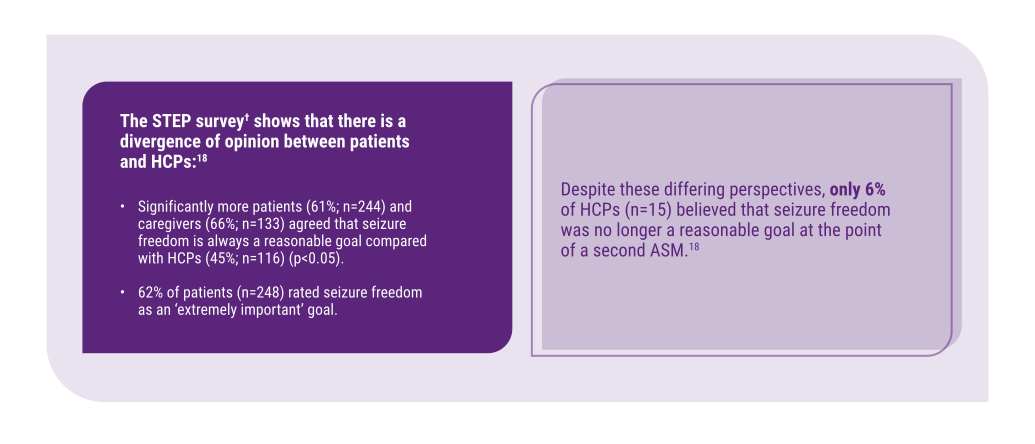
Higher levels of treatment response are associated with higher HRQoL and lower healthcare resource use.5 Despite this, over one-third of HCPs‡ feel there is too much focus on seizure freedom. In contrast, only around 29% of patients report recognising the term, even though 65% of HCPs say they use the term in discussions with their epilepsy patients.18 These findings demonstrate the need for clearer communication around treatment goals to align clinical priorities with patient understanding and expectations.
Mean T-score changes in overall QOLIE-31 over 28 weeks across varying levels of change in seizure frequency4
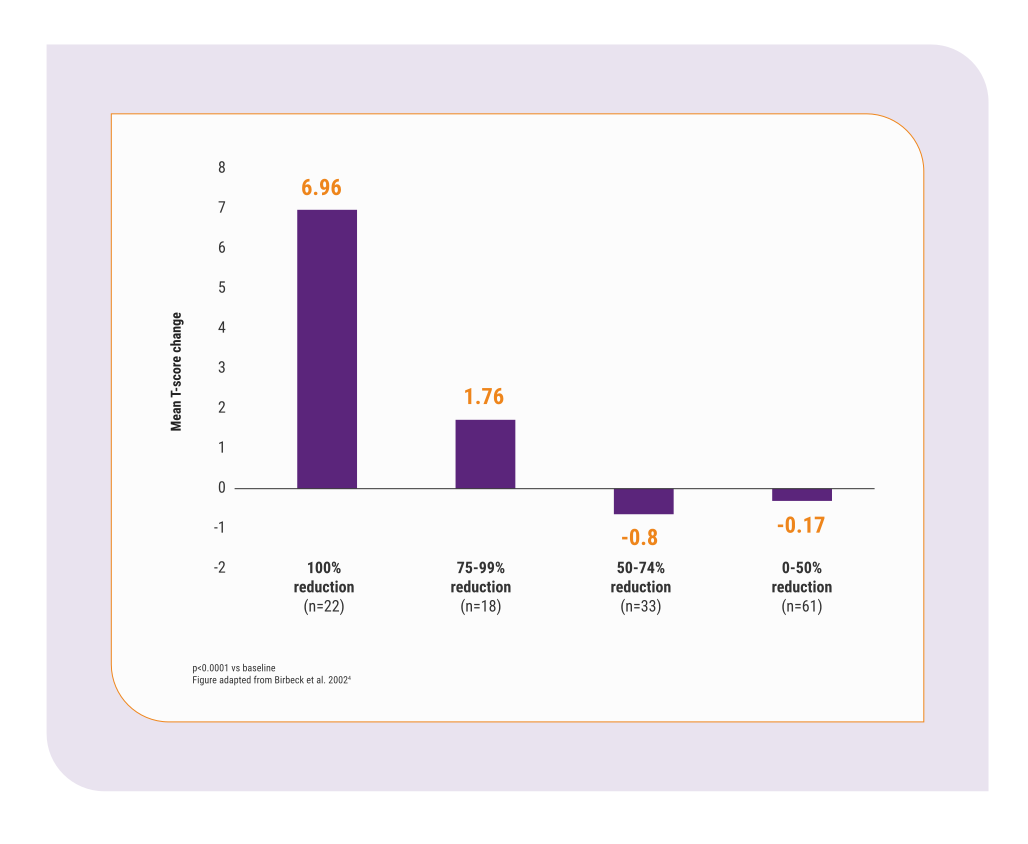
Improvements in HRQoL, as measured by overall QOLIE-31 T-scores, are closely linked to the degree of seizure reduction achieved. Patients who attained complete seizure freedom experienced the largest and clinically meaningful improvements in HRQoL over 28 weeks. In contrast, more modest seizure reductions were associated with smaller improvements, minimal change, or deterioration in HRQoL.4
The likelihood of achieving seizure freedom decreases sharply with each unsuccessful ASM regimen and remains low beyond the third or later treatment attempts. This supports the definition of drug-resistant epilepsy as failure to achieve sustained seizure freedom despite adequate trials of two appropriately chosen ASMs.19
Increase in probability of 1-year seizure freedom for each additional ASM regimen tried19
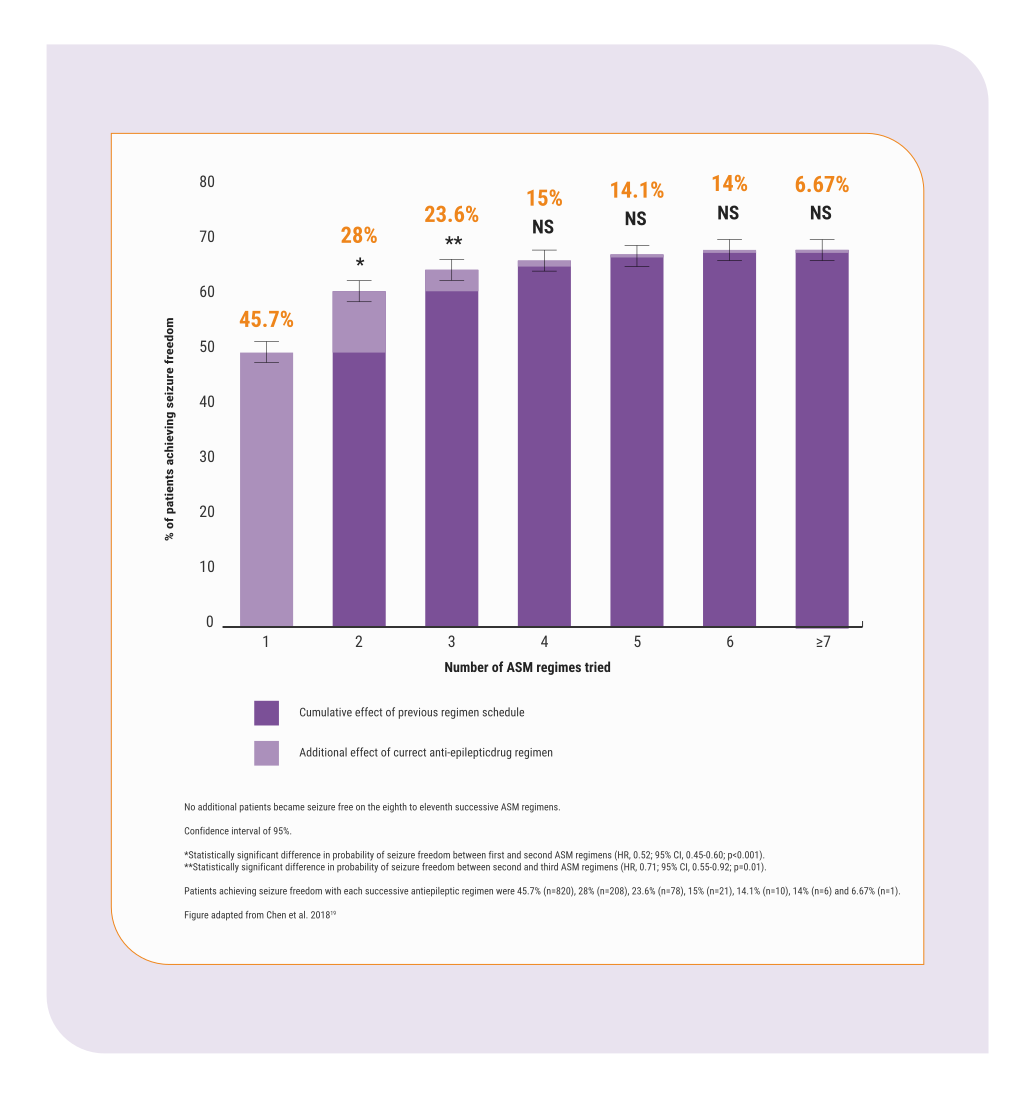
Despite numerical probability of improvement, there are no significant differences in the probability of seizure freedom between the third, fourth, fifth and greater numbers of ASM regimens.19
Up to 30% of people with epilepsy have drug-resistant epilepsy and remain refractory to pharmacological treatment.5
Patient and HCP perspectives on seizure freedom
The ‘Seize the Truth about Epilepsy Perceptions’ (STEP) survey, comprised of adult patients (n=400), caregivers (n=201), and HCPs (n=258), identifies a clear need to understand patients' individual life goals to optimise treatment decisions.18
When estimating seizure freedom achieved from first or second ASMs, there was a disparity between HCPs and patients; HCPs estimated 48% and 26%, respectively, versus 18% and 14% by patients. However, there was consensus between HCPs (12%) and patients (11%) with regard to the use of the third ASM achieving seizure freedom in the last 12 months.18
For example, in the STEP survey, 64% of patients (n=256) rated being able to ‘feel in control’ as ‘extremely important’.18
Meaningful seizure reduction on an individualised basis can significantly benefit people with epilepsy, where seizure freedom is unattainable.20,21
Evidence indicates that GPs with extended roles, working in collaboration with specialists (for example, neurologists) and epilepsy specialist nurses (ESNs), may offer an effective intermediary model linking primary and secondary epilepsy care.22 This is supported by the role of pharmacists in reviewing ASMs for interactions, supporting patient adherence, monitoring side effects and coordinating care with other HCPs where appropriate. Furthermore, as healthcare becomes more individualised, generalist intermediary roles are expected to play an important part in coordinating information, facilitating multidisciplinary care, and supporting patient decision-making.22
Poor coordination and communication within multidisciplinary teams (MDTs) can result in gaps in care and missed clinical information, which may place patients at risk.22
Many individuals require antiseizure medication for prolonged periods, often for several years and, in some cases, lifelong.23 ASMs vary in their effects on both the central nervous system and peripheral physiological systems, including hormonal regulation, bone metabolism, cardiovascular health, and renal, hepatic, haematological, and dermatological function.24 As a result, issues such as side effects, tolerability, metabolic complications, and adherence are key considerations in long-term epilepsy management.9,24–26
Cardiovascular, skeletal, and metabolic impacts
The enzyme-inducing effects of certain ASMs have been associated with adverse impacts on cardiovascular risk and bone health.24 These effects may contribute to reduced bone mineral density and an increased risk of osteomalacia, partly due to disturbances in vitamin D and calcium metabolism.9 Several ASMs, particularly earlier-generation agents, have been linked to atherothrombotic risk factors, including elevated homocysteine levels, dyslipidaemia, weight gain, and insulin resistance.25
Adherence challenges
Non-adherence is complex and multifactorial, presenting a major challenge in long-term ASM therapy.29 Non-adherence is common, with reported prevalence estimates ranging from approximately 20% to 80%, and is associated with serious clinical consequences, including increased mortality and higher rates of emergency department visits, hospital admissions, injuries, and fractures.26 Patients need to be aware of these potential consequences, which can include SUDEP, and therefore adherence should be regularly discussed during clinical reviews.30 Education is a key part of helping patients and caregivers understand the need for regular dosing of ASMs. Strategies can be adopted to improve medication adherence, including simplifying regimens to once daily dosing and 90-day medicine dispensing.
Ongoing reassessment, risk communication, and treatment optimisation
Maintaining control of seizure frequency in epilepsy requires ongoing clinical reassessment, as seizure patterns, tolerability, and patient circumstances can change over time. Regular ASM monitoring enables timely evaluation of treatment response and supports dose optimisation, adjustment, or switching of therapy where seizure control is suboptimal or adverse effects emerge.29
Ongoing review and ad hoc monitoring also provide an opportunity to identify high-risk patients, where a missed follow-up would be more detrimental. These include patients at risk of sudden unexpected death in epilepsy (SUDEP), people with frequent uncontrolled seizures, and those at risk from adverse treatment events due to treatment regimens or comorbidities.29 Furthermore, people with epilepsy have an approximately two-fold higher risk of suicide compared with the general population, highlighting the importance of identifying particularly vulnerable subgroups to support targeted suicide prevention efforts.30
Advances in genetic testing, neuroimaging and neurophysiological investigations may support re-evaluation of the diagnosis and help inform seizure classification and treatment decisions9,31
*NICE technology appraisal committee patient expert summary – though reduction in severity or number of seizures is clinically meaningful, potential benefits of 'seizure freedom' may have a set timescale, such as a year seizure-free, to re-apply for a driving licence.5
†In a quality of life and outcome study in 49 patients receiving cenobamate at one treatment centre over 8 years, seizure freedom was defined as six months seizure-free.14
‡US study including 258 HCPs.18
ASM=antiseizure medication; EEG=electroencephalogram; ESN=epilepsy specialist nurse; GABA=gamma-aminobutyric acid; HCP=healthcare professional; HRQoL=health-related quality of life; MDT=multidisciplinary team; QOLIE-31=quality of life in epilepsy inventory-31; STEP=seize the truth about epilepsy perceptions.
United Kingdom: ONTOZRY® (cenobamate) is indicated for the adjunctive treatment of focal–onset seizures with or without secondary generalisation in adult patients with epilepsy who have not been adequately controlled despite treatment with at least 2 anti–epileptic medicinal products.1
Republic of Ireland: ONTOZRY® (cenobamate) is indicated for the adjunctive treatment of focal–onset seizures with or without secondary generalisation in adult patients with epilepsy who have not been adequately controlled despite a history of treatment with at least 2 anti–epileptic medicinal products.1
1. Löscher, W. and Klein, P. (2021). The pharmacology and clinical efficacy of antiseizure medications: From bromide salts to cenobamate and beyond. CNS Drugs, [online] 35(9), pp.935–963.
2. Panayiotopoulos, C.P. (2005). Principles of Therapy in Epilepsies. In: The Epilepsies: Seizures, Syndromes and Management. Bladon Medical Publishing.
3. Ng, Y.H., Jamil, S.N.H., Sarian, M.N., et al. (2025). Antiseizure medications: Advancements, challenges, and prospects in drug development. Current Neuropharmacology, [online] 23(8), pp.879–906.
4. Birbeck, G.L., Hays, R.D., Cui, X. and Vickrey, B.G. (2002). Seizure reduction and quality of life improvements in people with epilepsy. Epilepsia, [online] 43(5), pp.535–538.
5. NICE (2025). Cenobamate for treating focal onset seizures in epilepsy [TA753]. [online] Available at: https://www.nice.org.uk/guidance/ta753 [Accessed August 2026].
6. Practical Neurology (2025). The Many Challenges of Drug-Resistant Epilepsy. [online] Available at: https://practicalneurology.com/diseases-diagnoses/epilepsy-seizures/the-many-challenges-of-drug-resistant-epilepsy/31834/ [Accessed August 2026].
7. Raru, T.B., Geremew, B.M. and Tamirat, K.S. (2021). Change in the frequency of seizure attacks and associated factors among adult epilepsy patients at Amanuel mental specialized hospital (AMSH): A generalized linear mixed model (GLMM). Neuropsychiatric Disease and Treatment, [online] 17, pp.2529–2538.
8. Epilepsy Foundation (2025). When Seizure Types Change: Part I. [online] Available at: http://epilepsynyc.com/2012/07/when-seizure-types-change-part-i/ [Accessed August 2026].
9. NICE (2022). Epilepsies in Children, Young People and Adults [NG217]. [online] Available at: https://www.nice.org.uk/guidance/ng217/resources/epilepsies-in-children-young-people-and-adults-pdf-66143780239813[Accessed August 2026].
10. Sills, G.J. and Rogawski, M.A. (2020). Mechanisms of action of currently used antiseizure drugs. Neuropharmacology, [online] 168(107966), p.107966.
11. ONTOZRY® Summary of Product Characteristics. United Kingdom and European Union.
12. Velez, F.F., Bond, T.C., Anastassopoulos, K.P., et al. (2017). Impact of seizure frequency reduction on health-related quality of life among clinical trial subjects with refractory partial-onset seizures: A pooled analysis of phase III clinical trials of eslicarbazepine acetate. Epilepsy & Behaviour, [online] 68, pp.203–207.
13. Halford, J.J. and Edwards, J.C. (2020). Seizure freedom as an outcome in epilepsy treatment clinical trials. Acta Neurologica Scandinavica, [online] 142(2), pp.91–107.
14. Elizabath, R., Zhang, E., Coe, P., Gutierrez, E.G., Yang, J. and Krauss, G.L. (2021). Cenobamate treatment of focal-onset seizures: Quality of life and outcome during up to eight years of treatment. Epilepsy & Behaviour, [online] 116, doi:https://doi.org/10.1016/j.yebeh.2021.107796.
15. Poochikian-Sarkissian, S., Sidani, S., Wennberg, R. and Devins, G.M. (2008). Seizure freedom reduces illness intrusiveness and improves quality of life in epilepsy. Canadian Journal of Neurological Sciences, [online] 35(3), pp.280–286.
16. Epilepsy Foundation (2025). Driving and Independence. [online] Available at: https://www.epilepsy.com/stories/driving-and-independence [Accessed August 2026].
17. Gunasekera, C.L., Sirven, J.I. and Feyissa, A.M. (2023). The evolution of antiseizure medication therapy selection in adults: Is artificial intelligence-assisted antiseizure medication selection ready for prime time? Journal of Central Nervous System Disease, [online] 15, pp.11795735231209209.
18. Becker, D.A., Long, L., Santilli, N., Babrowicz, J. and Peck, E.Y. (2021). Patient, caregiver, and healthcare professional perspectives on seizure control and treatment goals. Epilepsy & Behaviour, [online] 117(107816), p.107816.
19. Chen, Z., Brodie, M.J., Liew, D. and Kwan, P. (2018). Treatment outcomes in patients with newly diagnosed epilepsy treated with established and new antiepileptic drugs: A 30-year longitudinal cohort study. JAMA Neurology, [online] 75(3), pp.279–286.
20. Kellenaers, J.T.F., Rijkers, K., van Mastrigt, G.A.P.G., et al. (2023). Resective Epilepsy Surgery, QUality of life and Economic evaluation (RESQUE): the change in quality of life after resective epilepsy surgery—protocol for a multicentre, prospective cohort study. BMJ Open, [online] 13(7), e064263.
21. van der Kop, M.L. (2023). The need for an individualized approach to what is considered a clinically significant reduction in seizure frequency: A patient’s perspective. Epilepsia, [online] 64(6), pp.1469–1471.
22. Cotterill, C.L., Booth, A., Dickson, J.M. and Hind, D. (2024). Patients’ perspectives of epilepsy care by specialists and generalists: qualitative evidence synthesis. BJGP Open, [online] 8(4), BJGPO.2024.0072.
23. Epilepsy Society (2025). Side effects and interactions of ASMs. [online] Available at: https://epilepsysociety.org.uk/about-epilepsy/anti-seizure-medication/side-effects-and-interactions [Accessed August 2026].
24. LoPinto-Khoury, C. (2022). Long-term effects of antiseizure medications. Seminars in Neurology, [online] 42(5), pp.583–593.
25. Hsu, C.Y., Cheng, C.Y., Lee, J.D., Lee, M. and Ovbiagele, B. (2021). Effects of long-term anti-seizure medication monotherapy on all-cause death in patients with post-stroke epilepsy: a nationwide population-based study in Taiwan. BMC Neurology, [online] 21(1), p.226.
26. Nakhutina, L., Gonzalez, J.S., Margolis, S.A., Spada, A. and Grant, A. (2011). Adherence to antiepileptic drugs and beliefs about medication among predominantly ethnic minority patients with epilepsy. Epilepsy & Behaviour, [online] 22(3), pp.584–586.
27. Malek N et al. (2017). A review of medication adherence in people with epilepsy. Acta Neurol Scand. 135(5):507-15.
28. NICE (2009). Medicines adherence: involving patients in decisions about prescribed medicines and supporting adherence. [CG76]. [online] Available at: https://www.nice.org.uk/guidance/cg76/chapter/Recommendations#supporting-adherence [Accessed August 2026]
29. National Guideline Centre (UK) (2022). Evidence Reviews for Monitoring: Epilepsies in Children, Young People and Adults: Diagnosis and Management: Evidence Review 7. National Institute for Health and Care Excellence (NICE).
30. Melin, S., Tomson, T., Sveinsson, O., et al. (2024). Incidence, methods and circumstances of suicide in epilepsy: A population-based study in Sweden. Epilepsy & Behaviour, [online] 161(110106), p.110106.
31. Morita-Sherman, M., Trinka, E., Kwan, P., Ikeda, A., Cho, M. and Hampel, H. (2025). Precision medicine for epilepsy: challenges and perspectives for an optimized clinical care pathway. Frontiers in Neurology, [online] 16, p.1644835.
MAT-UKI-0512-P | September 2026